HARRY NELSON ATWOOD
-1967
 
 
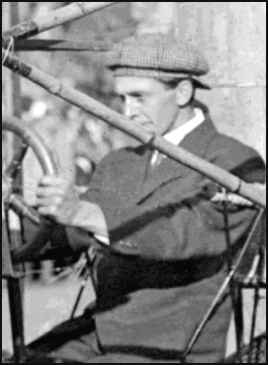
Harry N. Atwood


Leo stevens & Harry Atwood
Library of Congress Archive,
Courtesy of Greg Powers, 7-23-06


Harry Atwood
 
 
Harry N. Atwood
Library of Congress Archive,
Courtesy of Greg Powers, 7-23-06


EB Finishes Molded Ship
Harry Atwood Designs Plane of Veneer
(Reprinted from The Detroit News of Sunday, July 14, 1935.)
     Nearly a quarter of a century ago, Harry Atwood retired from aviation. A pupil of the Wright brothers, contemporary of Glenn H. Curtiss, Lincoln Beachey and others, Atwood simply dropped out of flying and seluded himself in the hills of New England.
     The other day he emerged from jis voluntary seclusion with an airplane built of molded veneer, light and strong of construction, an efficient performer in the air.
     A Birch tree, six inches in diameter, provided the material. About $60 worth of Atwood's specially processed veneer was sufficient to build the ship.
 
CHAMBERLIN ENTHUSIASTIC
     Clarence Chamberlin, who flew the ship in its initial tests at Nashua, N. H., is enthusiastic about the wooden craft. Powered with a 30 horsepower engine, the plane flies at 120 miles an hour. It is a low-wing monoplane with a span of only 25 feet.
     Atwood's goal is a one-piece plane, built entirely of laminated wood. His first thought of such a craft shortly after the World War but became discouraged when early experiments failed. The difficulty lay in making the wood strips and layers stick together.
     He went into the furniture business, but was forded out of that when the financial crash came in 1929. He returned to the chemical company which had employed him before the war and continued his research for a thermoplastic which would guarantee adhesion of veneer.
 
DEVELOPS PROCESS
     Eventually he developed what he calls "duply" and started work on the plane which he recently completed.
     Over a solid wooden mandril, sheathed in cellophane, Atwood places his thermo-plaster in paper form. Strips of veneer, twenty-thousandths of an inch thick, are wound around the form. Then comes a coating of rubber insulation.
     The entire form is wheeled into a steam room and cooked for three-quarters of an hour. After the cooking, the rubber insulation and mandrel are removed, leaving the veneer baked hard in the desired shape.
 
ONE-PIECE FUSELAGE
     Although Atwood built his first plane in sections, he believes that some day an entire fuselage can be molded in one piece. And for a total cost of $1,000, he says, the plane can be produced, engine and all, with the possibility of further reduction in cost with increased production.
     Atwood claims his cooked veneer is lighter than dural, now commonly used in airliner construction, and costs much less. He applies a fire-proofing coating which makes the craft virtually immune to flames.
     (Editor's Note.---Later reports from the Federal Bureau of Air Commerce indicate a possibility that EB Atwood may be asked to build one of his planes for the Government under a contract which would pay for development costs.)
from CHIRP, SATURDAY, AUGUST 17, 1935, DETROIT MICHI.
courtesy of Steve Remington - CollectAir


WRIGHT MEMORIAL
Wright-Patterson Air Force Base
 
 
Wright Brothers Field
 
 
Plaque with 119 Names of Flyers Who Trained at Wright Brothers Field
Photo courtesy of J. N. Parmalee

     The name of Harry N. Atwood is found on the plaque pictured above among the 119 names of pioneer flyers who trained at the Wright Brothers field at Huffman Prairie. To visit the page which lists all of the flyers, and which displays several photographs of the memorial, just click on:
Huffman.


Curtiss Model D Unknown Aviator
 
 
Harry Atwood in Curtiss Model D (above)
Photo Courtesy of Roy Nagl
Ancient Aviators Website


ONLINE RESOURCES
     If you search for "Harry N. Atwood" using Google, (081303), you will find about 55 links. Among the best are:
PAPER TRAIL
Selected Manuscripts from the Collections
of the Rutherford B. Hayes Presidential Center.

     On this website you will find a nice little biography of Atwood illustrated with two photographs. You can access the site by clicking on the title above.


Harry N. Atwood on His Record Breaking Trip
from St. Louis to New York, 1265 miles, August 14 to 25, 1911
From the AEROFILES website.
You will also find an entry for Atwood, Carolina
the Carolina Aircraft Company.


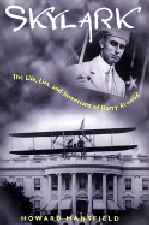
ATWOOD LANDS ON WHITE HOUSE LAWN
1911 - For the first time, a pilot flew an airplane onto the lawn of the White House! Harry N. Atwood flew in to accept an award from President William Taft. There wasn't a National Airport at the time, you see. Today, if you land a plane on the White House lawn, you do so at your own risk. If you don't get shot out of the sky first, you'll probably receive a hail of bullets from the Secret Service as a welcoming salute. It's not that people don't keep trying. In 1994, a small plane crashed on the lawn and slammed into the White House, killing the pilot.
From Those Were The Days, Archive for July 14.
in the Today in History feature
from 440 International


ATWOOD FLIES OVER HAMPTON, NH, 1912
     Although not an athletic activity, flying airplanes has long been a sport for Hampton, New Hampshire men and women. Pioneer aviator Harry N. Atwood flew his biplane over the town in May 1912 en route from Saugus, Massachusetts, to Portland, Maine. According to the newspaper, he came in low over the eastern part of town, then flew over the village "close enough to inspect the Dearborn monument. This was the first view of an aeroplane for many people in town." A few months later, people got a closer look at the plane when Atwood landed on the Hampton River in July. While flying along the coast, he had become lost in a fogbank off Rye Beach, circled around, and finally recognized Hampton River, where he landed. A highlight of the 1915 Carnival Week was aviator Chauncey Redding, who performed aerial stunts off the beachfront and took passengers for rides. For many years, Bob Fogg and his airplane were a popular attraction at the Beach, landing on the sand to pick up passengers for sightseeing trips.
This excerpt is taken from the online version of
Hampton" A Century of Town and Beach, 1888 to 1988
by Peter Evans Randall.
I hearlily recommend that you visit the site by clicking on the title.
The specific item is taken from
Chapter 20, Sports.
This anecdote of Harry Atwood was kindly provided by the
Lane Memorial Library
2 Academy Avenue, Hampton, NH 03842


FLYING MACHINES: CONSTRUCTION AND OPERATION
by W.J. Jackman and Thos. H. Russell
Harry Atwood is mentioned in Chapter XXVII
of this Free Online Book
on the Book Rags site.
To read the whole story' just click on:
Harry N. Atwood
You may want to use the "Find" function on "Atwood"
 
I heartily recommend that you visit the homepage
of this unique resource by clicking on:
Book Rags
Among other things,
you will find more than 1500 FREE e-books online.


Harry N. Atwood died in 1967
From The Early Birds of Aviation
Roster, 1996


BackNext Home